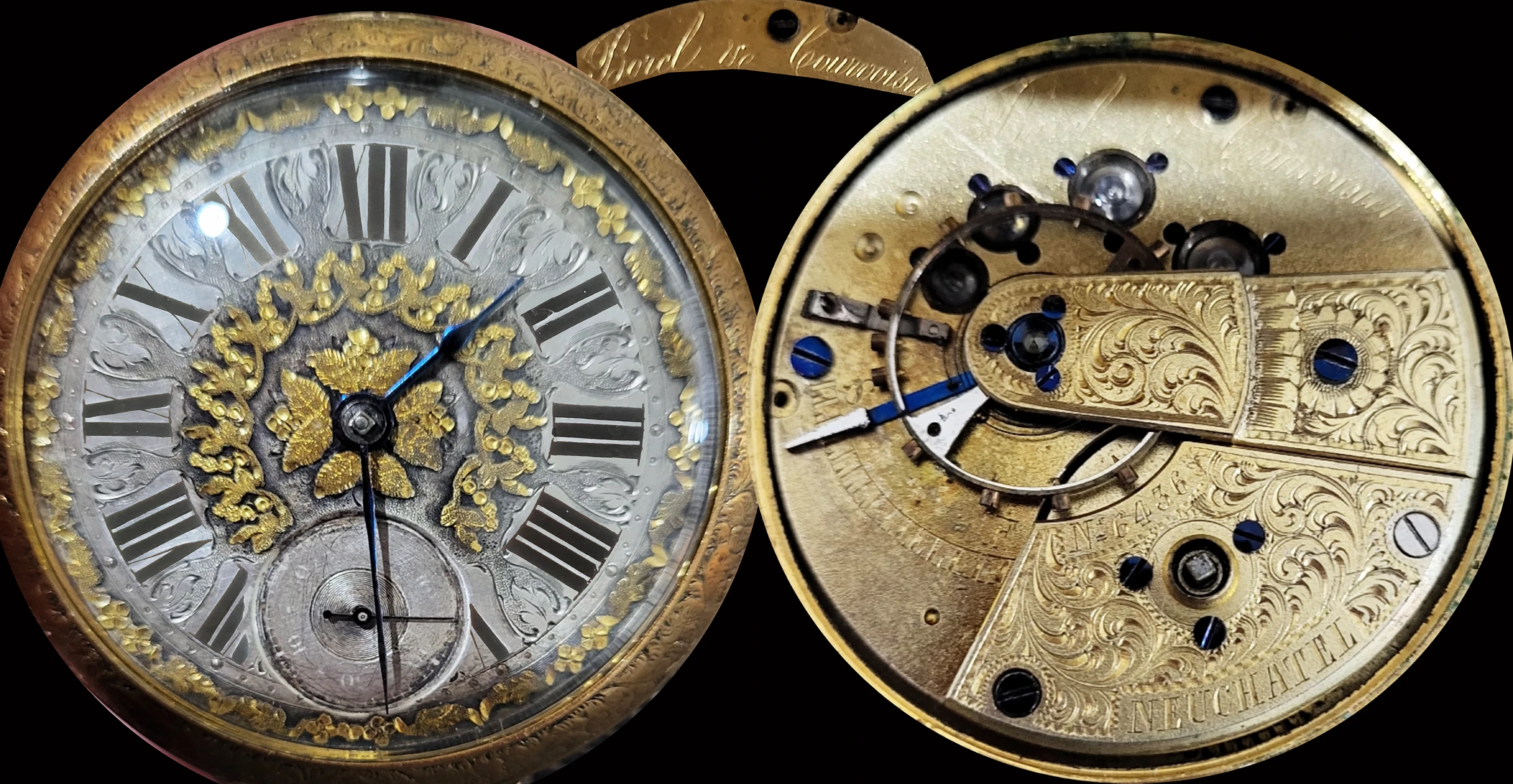
Their “Genre Espagne” Pocket Watches
A horological dynasty: from établissage to industry
Foundation and early years
Establishment comptoir, high-precision chronometry, and commercial dynamism in the Spanish market during the second half of the 19th century.
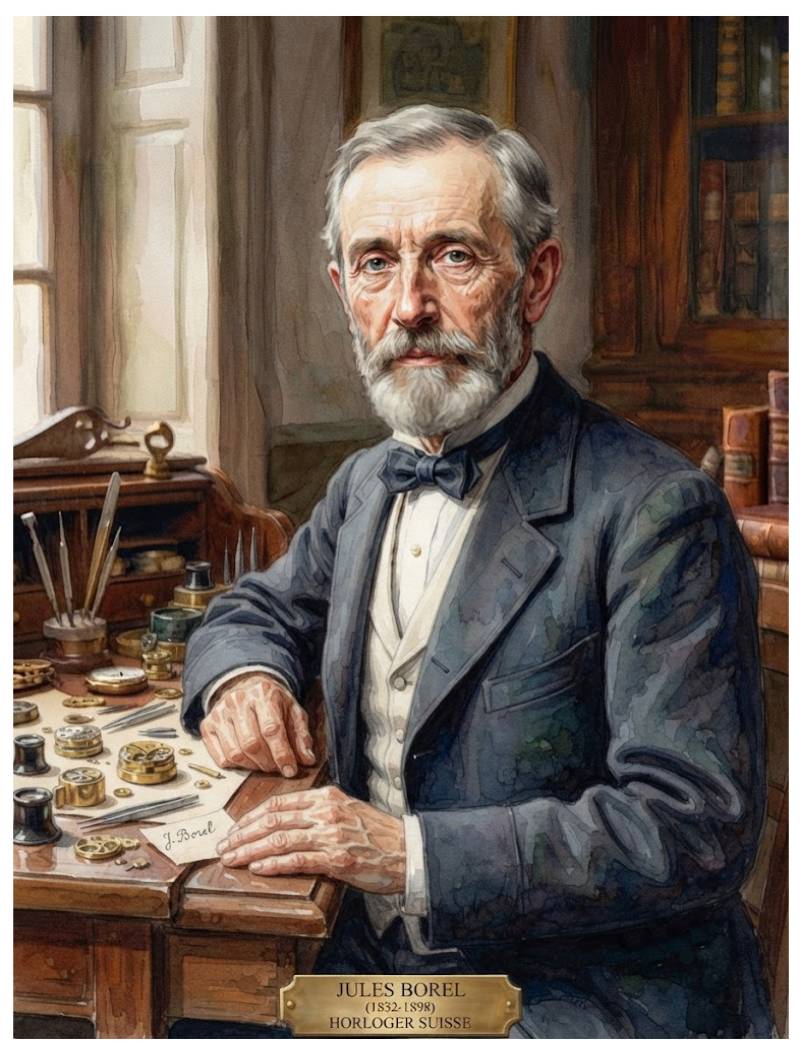
The activity of this house—Genevan in origin but permanently rooted in Neuchâtel—dates back to January 1859. Founded under the business name «Borel et Courvoisier, Neuchâtel (Suisse). Fabricants d’horlogerie en tous genres», the company was established by Jules-Alphonse Borel-Petitjaquet (1832–1898) and Paul Courvoisier (1834–1892), who had taken over the watchmaking business of Henri Reynier fils. In 1863, Jules married Sophie Augusta Courvoisier, Paul‘s sister, thus uniting watchmaking and blood ties.
The beginnings were modest, and the first directors were not afraid to declare themselves novices. However, they possessed a thorough awareness of the requirements of the trade and the soon-to-be-justified ambition to satisfy them. Borel et Courvoisier selected the finest suppliers: ebauches from Fontainemelon, balance wheels from Plancemont, escapement setups entrusted to artisans in Buttes, Les Bayards, La Côte-aux-Fées, or Couvet, and balance springs from Le Locle. Cases, for example, were ordered from La Neuveville and dials from Geneva. The Borel et Courvoisier comptoir could count on the collaboration of the era’s finest watchmakers: Girard-Perregaux, Du Boy and Leroy from Le Locle, and the Aubert brothers from Le Sentier.
Very early on, the firm adopted a resolutely international orientation: as early as 1860–1861, its productions were already exported to Hamburg, Genoa, London, the United States, and South America, confirming a global commercial strategy from its first years of existence. In its beginnings, the house of Borel & Courvoisier benefited from the strategic support of capital and technical know-how from Ferdinand Richard and his sons, as well as the collaboration of Édouard Barbezat, who was associated with the company until his official retirement in 1885.
Commercial expansion and consolidation
Borel et Courvoisier, who in their early days apologized so courteously for the slightest imperfection detected in a cap jewel or balance spring, would grasp every aspect and all consequences of technical evolution. To cite just one example, they did not hesitate to adopt crown winding and contributed greatly to its dissemination.
The 1859 comptoir would become a model workshop, then a modern-style factory at La Maladière, where all control operations and laboratory testing ensured an impeccable finish.
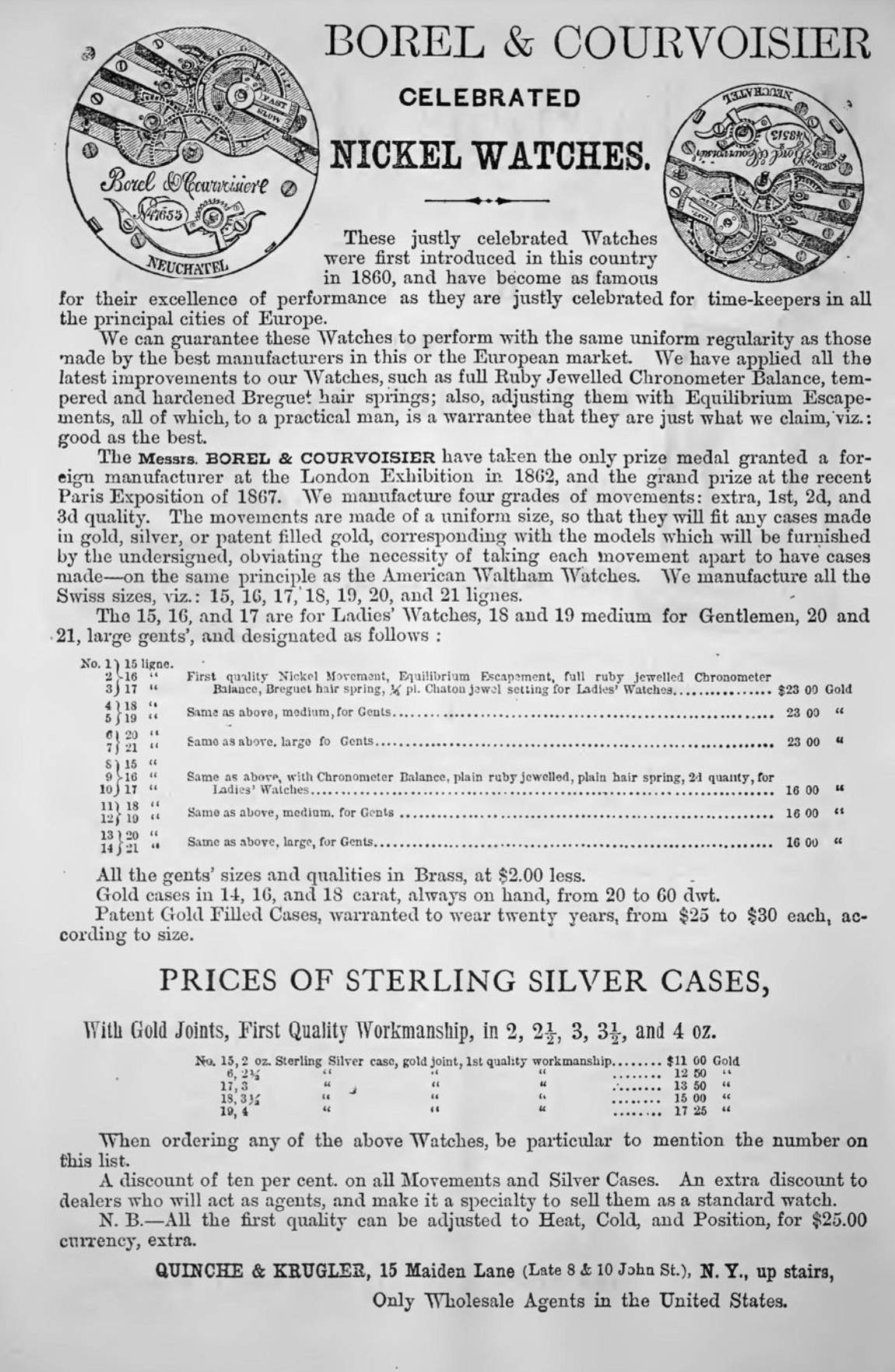
Advancing in their industrial effort, the Neuchâtel manufacturers made parallel progress in foreign markets. As early as 1859, contacts were established in Hamburg, Genoa, and London. At the same time, relations were forged with Henry Droz and Lucien Morel in New York. However, it was primarily Leo Lesquereux, son of the famous botanist and geologist, who recognized and helped establish the value of Borel et Courvoisier watches in the United States.
In 1860, the firm shipped its first consignments to Uruguay. In 1867, they began prospecting Spain. Finally, Japan, China, and the Indies would offer the Neuchâtel firm a new and broader field for export. It registered its own trademark for China and supplied, in particular, grand luxury hunter-case watches, as well as gold jewelry watches featuring pearls and enamels.
Inscribed at the heart of the Jura system of bienfacture, the house embodied the model of the high-quality comptoir, combining the rigor of observatory timing competitions with great responsiveness to the technical transformations of the second half of the 19th century.
Production system: traditional établissage
Like the major manufactories of the period, the house of Borel & Courvoisier operated under the traditional and rigorous system of établissage. It relied on a network of specialized suppliers from the Neuchâtel Mountains and the Jura for the supply of ebauches and components, notably the firms of Fontainemelon, Mauler, or Ducommun. The finishing work—final assembly, adjustment, escapement, and fine tuning—was entrusted to highly qualified master watchmakers working at home. The entirety of this decentralized production was then monitored by a strict system of technical supervision managed by the house itself. This structure was reinforced starting in 1881 by Adamir Debrot, who became the central figure in production control and ensured the consistency and excellence of manufacturing for decades.
Strategy in Spain: commercial network and consolidation
While the United States represented the firm’s primary outlet, the year 1867 marked the starting point of a deep and lasting penetration into the Spanish market. This expansion was heavily structured by the commercial efforts of Jean Courvoisier, who undertook the prospecting of the Iberian Peninsula. His numerous travels and correspondence, preserved from Madrid, Barcelona, and Murcia, bear witness to the establishment of an organized and extensive distribution network, reaching major urban centers as well as secondary markets and wealthy bourgeois and rural clienteles. Spain thus became a strategic market, integrated into a framework of controlled and continuous export. Jean Courvoisier‘s commitment took a more institutional turn when he was called upon by Neuchâtel authorities, leading him to assume the direction of finances for the city of Neuchâtel in 1877.
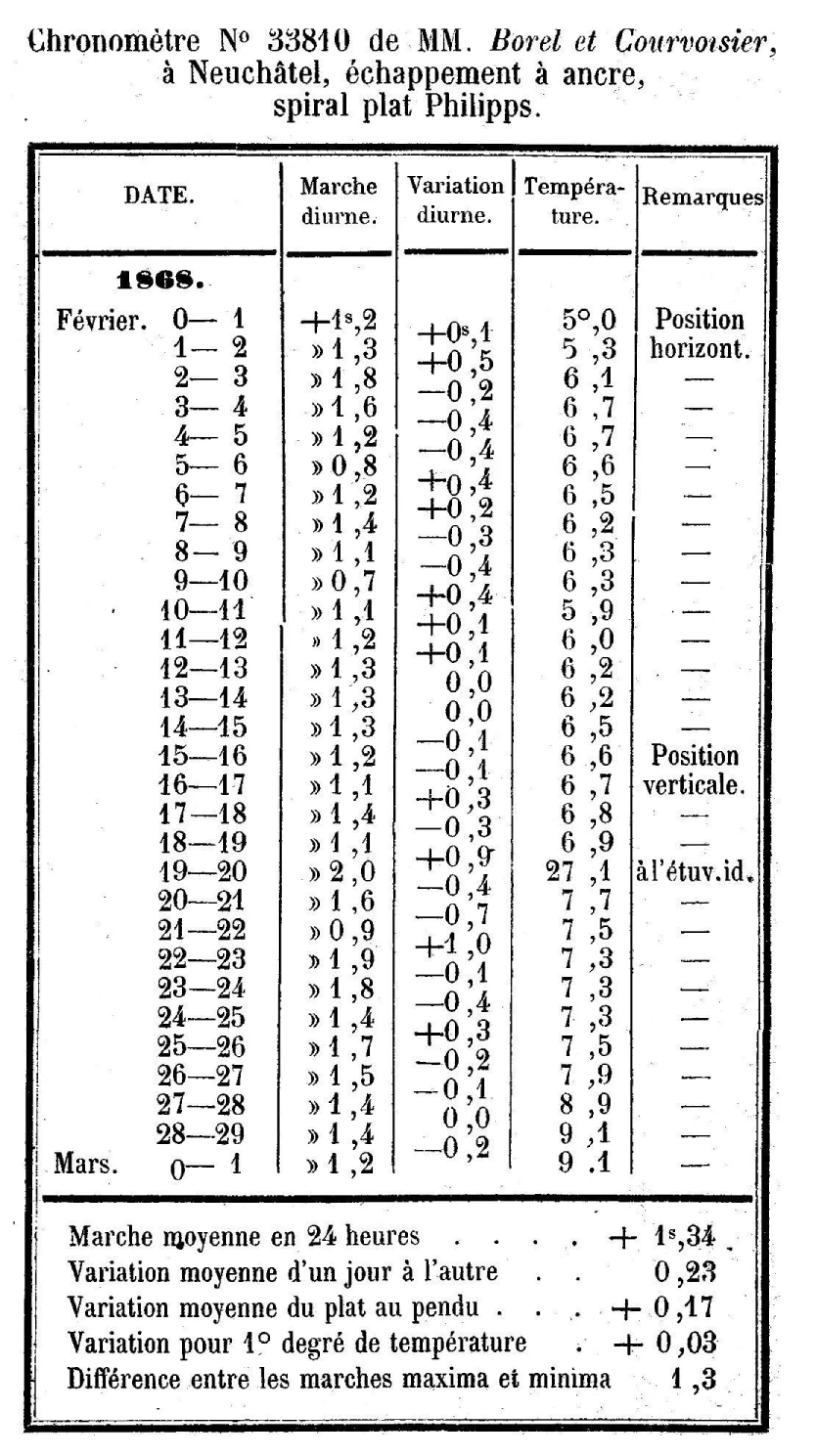
Excellence in chronometry and international recognition The house distinguished itself very early through a constant pursuit of chronometric precision. It regularly participated in the activities of the Société des Sciences Naturelles de Neuchâtel and in the timing competition bulletins. As early as 1866, it obtained its first major recognition at the Neuchâtel Observatory competitions. Between 1875 and 1876, it confirmed its performance in timing competitions, subsequently earning a distinction at the Philadelphia International Exhibition in 1876. Pocket chronometer No. 34474 won a first prize in Neuchâtel, while the house also distinguished itself at the Geneva competition in 1880. Furthermore, it was awarded at major universal exhibitions: London (1862), Philadelphia (1876), Paris (1878, gold medal), and Chicago (1893). These successes directly reinforced its positioning in foreign markets, particularly in Spain.
Diversified production for the Iberian market The établissage registers reveal a diversified production intended notably for the Iberian market: high-quality hunter-case pocket watches (19 lines, lever escapement, thin construction), women’s gold watches (14 lines), cylinder watches in a more accessible segment (15 lines), and complication pieces including repeaters, chronographs, and split-seconds chronographs.
Technical innovation: the ASK system (1883) In the context of the transition from key winding to stem winding, the house adopted the patented ASK system by Alexandre Savoye-Keller in 1883. This mechanism allowed hand-setting via the crown by means of an external push-piece integrated into the case middle. This innovation played an important role in modernizing production and adapting to the requirements of international markets.
In January 1859, the house was founded under the business name Borel & Courvoisier. In 1894, Paul Courvoisier left the company; Ernest Borel, son of Jules Borel, joined the management, and the business name became Borel-Courvoisier. In 1898, following the death of Jules Borel, Ernest Borel assumed full direction of the company, which became Ernest Borel & Cie. This same period marked a profound technical modernization. In 1906, the company permanently established itself in the building at Rue Louis Favre No. 15 in Neuchâtel.
Global expansion and brand consolidation (1903–1927)
At the beginning of the 20th century, the company reinforced its expansion into non-European markets, particularly in Asia. As early as 1903, the presence in China marked the opening of a lasting commercial axis. In parallel, the brand identity was structured around a strong symbolic dimension, embodied by the famous «lovers dancing» logo originating from the late 19th century.
Restructuring and growth in the 20th century (1927–1997)
In 1927, Jean-Louis Borel joined the company. In 1936, he officially took the head of the firm and carried out an organizational restructuring, transforming the house into a joint-stock company: Ernest Borel & Cie, successeurs de Borel-Courvoisier, S.A. After World War II, the brand entered a phase of increased industrialization and chronometric recognition. Between 1945 and 1959, thousands of watches obtained C.O.S.C. certificates. This period was marked by the construction of a new factory in 1947. In the second half of the 20th century, the house further expanded its international presence, particularly in Asia. In 1997, it was restructured in La Chaux-de-Fonds.
Ernest Borel in the 21st century: tradition and innovation
In the 21st century, Ernest Borel pursues its activity by relying on its historical Neuchâtel heritage while adapting to the contemporary demands of the global market.
Currently, in 2018, Ernest Borel reached a decisive milestone in its corporate structure by integrating into the Citychamp Watch & Jewellery group as an indirect subsidiary. Faithful to its spirit of exploration and innovation, the house continues today to combine its extraordinary cultural heritage with cutting-edge watchmaking techniques, projecting itself into the future with the firm goal of continuing to write its legend in the global watch industry.
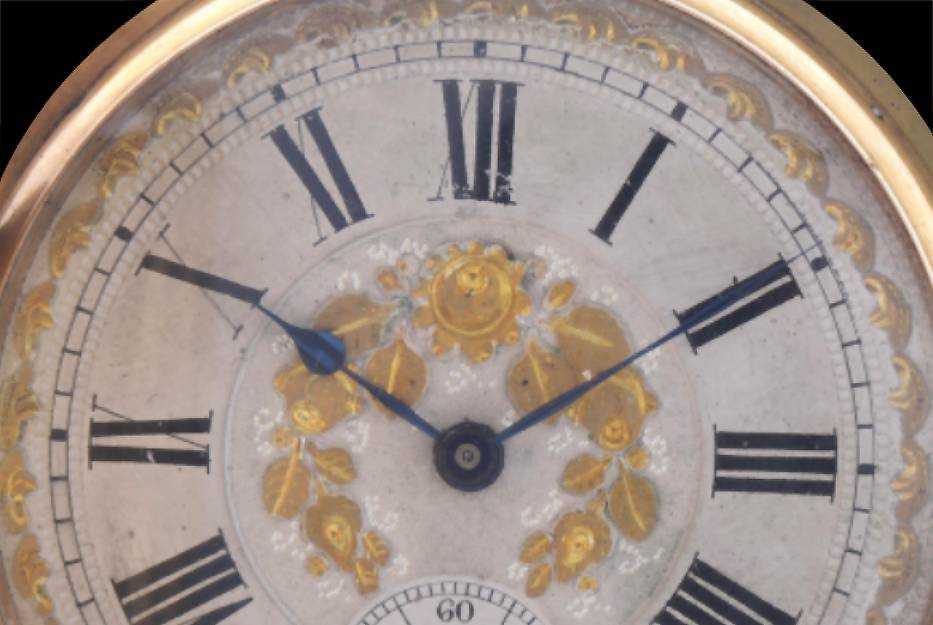
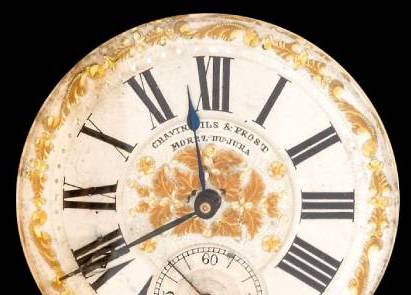
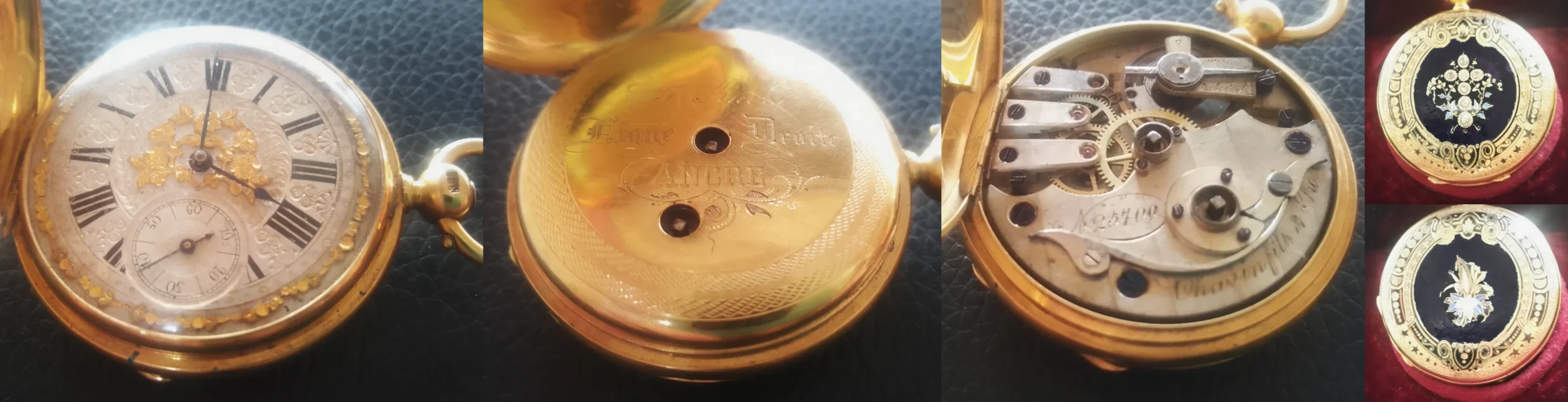
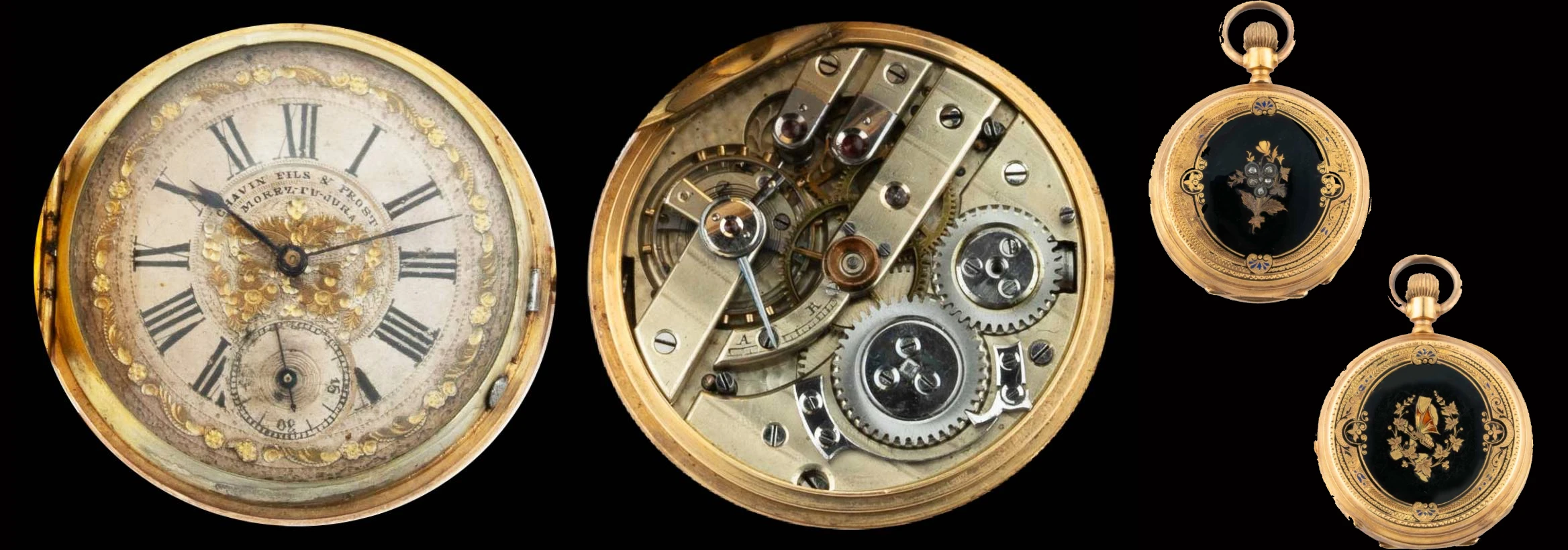
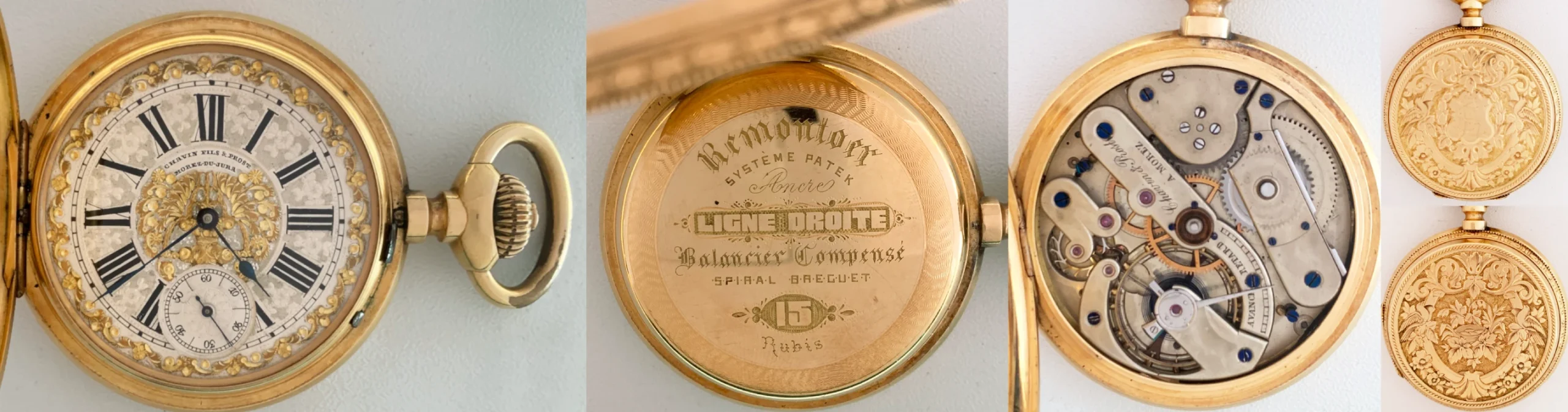
Their “Genre Espagne” Pocket Watches
Chavin Fils & Prost: Tradition and Heritage in Watchmaking of Morez
The industrial history of Morez is a chronicle of lineages that, from generation to generation, transformed the economic landscape of the French Jura. The Chavin saga is a fundamental example of this continuity, uniting the technical mastery of 18th-century enameling with the commercial and watchmaking expansion of the 19th century.
The Chavin lineage: From Pierre-Célestin to Aimé
The family’s industrial tradition finds its cornerstone in Pierre-Célestin Chavin (1758–1821), a highly prestigious enameler in Morez. In the late 18th century, Pierre-Célestin played a key role in providing local watchmaking with technical autonomy by manufacturing an enameled clock dial in 1788, which allowed regional clockmakers to reduce their reliance on Swiss imports.
This legacy of precision and enterprise was passed down to his son, Claude François Louis Xavier Chavin (1782–1830), and subsequently consolidated by his grandson, Aimé Chavin (1810–1860), also known as Chavin frère aîné. It was Aimé who, in the mid-19th century, transformed the family establishment—which had previously operated as a forge, enameling workshop, and mill—into an industrial foundry located near present-day Place Henri Lissac, supplying essential components to the watchmaking industry of the era.
In 1839, he married Marie Reine Girod, hailing from a family with a rich watchmaking tradition. Furthermore, he was one of the principal subscribers toward the establishment of the municipal watchmaking school of Morez in 1854, intended for the manufacturing of watches.
Aimé consolidated the family legacy through an exceptional technical contribution. In 1850, he obtained a 15-year patent for a spring- or weight-driven clock featuring a compensation balance, an innovation that improved the precision of Comtoise clocks, which were traditionally simpler in construction. His participation in the Universal Exhibition of London in 1851—where he presented various clockmaking systems under the name «Chavin, Morez-du-Jura» and earned a second-class medal—demonstrated his ability to combine local tradition with technical advancements, reaffirming the prestige of Morez on the international horological stage. He also participated in the Paris Exhibition of 1855 with a selection of horological pieces.
The company Chavin Fils & Prost: A lineage alliance
Following the death of Aimé in 1860, his widow maintained the workshop, signing her movements «Veuve Chavin Frère Aîné».
The family’s capacity for adaptation reached a new peak after Aimé‘s passing. The marriage of his daughter, Marie-Louise Joséphine Chavin, in 1862 to her first cousin, François Charles Prost—also a grandson of Pierre-Célestin and a watchmaker—gave birth in the second half of the 1860s to the company Chavin Fils & Prost, one of the most recognized firms in Morez of its era.
Chavin Fils & Prost represents the culmination of a vision that combined the technical legacy of the Chavin family with the horological specialization of the Prost family. Operating during the second half of the 19th century, the firm consolidated itself in an international market, leaving signed watches that today stand as testament to the watchmaking mastery of Morez at its peak.
On June 9, 1892, following the death of the matriarch Marie Reine, Chavin Fils & Prost ceased their joint activity, while François Charles Prost pursued it with his wife under the trademark Prost-Chavin (Charles-Françoise), which would disappear upon his death in 1906.
Un Héritage qui Perdure
La famille Chavin Fils & Prost représente un chapitre fondamental dans l’histoire de l’horlogerie de Morez. Sa capacité à innover et à s’adapter a laissé une empreinte indélébile dans la région, dont l’écho résonne encore dans les montres portant sa signature et dans les archives historiques qui attestent de son excellence.